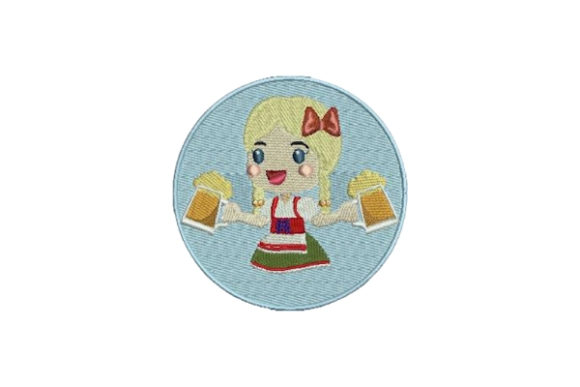
A Friendly, Timeless “Girl in Dirndl” Embroidery Design
When an embroidery design file lands in my library, my first question is always practical: where would I actually use this? The “Girl in Dirndl” design immediately presents itself not just as a cute motif, but as a piece of character. There’s a gentle, folkloric charm here that feels both timeless and warm. The shape is balanced, with a friendly figure that has enough detail to be interesting but not so dense that it becomes a stitching challenge on most fabrics.
The Immediate Mood and Project Fit
This design creates a mood of rustic cheer. It’s not overly cartoonish; it has a illustrated, almost storybook quality. That makes it a natural fit for projects where you want to evoke a sense of tradition, craft, or simple joy. I’m already thinking it would be perfect for a custom kitchen towel or a linen apron—items that belong in a cozy, handmade kitchen. For a small shop product, this “Girl in Dirndl” could beautifully anchor a line of European-themed holiday gifts or boutique nursery decor.
Where This Design Performs Brilliantly
Let’s walk through a real scenario. Imagine you’re preparing a batch of embroidered tote bags for a craft fair. You want designs that are visually clear, stitch up reliably, and have broad appeal. This design, with its central figure and clean outlines, would stitch out cleanly on bag fabric. The smile it’s meant to bring is genuine; on a finished product, it feels approachable and well-made.
It would translate wonderfully to a child’s sweatshirt or a baby blanket corner—a sweet, personalized gift. As an embroidered patch, it could be appliquéd onto a cap or a backpack, carrying that handmade presentation with it. For Etsy sellers or digital product sellers, this file is a solid design asset. It’s versatile enough to be used in printable mockups for a range of products, from tea towels to pillow covers, helping buyers visualize the final item.
Handling the Stitching: Practical Considerations
In real-life embroidery, the devil is in the details. For this “Girl in Dirndl,” I’d pay close attention to the smaller elements. The dress details and facial features, likely rendered with satin stitches and maybe some fill stitch areas, need a good stabilizer choice. On textured fabrics like a woven towel, it will pop nicely. On stretchy fabrics like a t-shirt, you’d want to hoop carefully and perhaps use a cut-away stabilizer for longevity.
Dark fabric is always a consideration for light-colored designs. The contrast needs to be strong. I’d absolutely test this on a scrap of dark denim or a black sweatshirt material first to see how the thread colors hold up. Similarly, on curved surfaces like caps, the design’s compact layout should work, but you must confirm the hoop size compatibility first—a step never to skip.
Spots for Extra Care
While the design feels well-balanced, areas with potential dense stitch clusters—perhaps in the dirndl bodice or hair—need a glance in the file preview. High stitch density on thin fabrics can cause puckering. Also, if there are any tiny decorative accents, they might get lost on very textured backgrounds. For products destined for frequent washing, like baby clothes or kitchen linens, ensuring the stitch structure is secure and using durable threads will maintain that customer trust and product value.
The Business and Presentation Impact
From a commercial embroidery or craft business perspective, this design adds a specific kind of value. It’s recognizable without being generic. For a brand leaning into European themes or rustic charm, it offers consistency. As a finished product, it elevates a simple item into a giftable, branded piece. A customer seeing this on a handmade product feels the care taken—the visual appeal is friendly and professional.
For engagement, it’s a design that tells a little story. It’s more engaging than a simple logo, inviting a smile or a question about the tradition it references. That can be a powerful tool for small shop merchandise, making an item memorable.
Essential Designer Notes Before You Hoop
Before running this machine embroidery design for a client project or your own merchandise, do your homework. Always, always stitch it out on a scrap of your target fabric first. This is non-negotiable. Check the thread color contrast against your actual background material. Review the stitch density by looking at the file in your software; does it look manageable for your chosen hoop size?
Inspect the small details. Sometimes a lovely illustration has a tiny line that doesn’t translate well to stitches—a quick test reveals this. I also recommend testing the design in a simple black and white mockup to see how the shapes read without color, which helps assess its fundamental clarity.
Finally, a crucial step for any designer using files for commercial projects: confirm the licensing. The description mentions it comes with multiple embroidery file formats and can be used in multiple embroiderers, which speaks to compatibility. But you must verify the terms for selling finished products or using it in digital product previews. Only then can you proceed with confidence, knowing your beautiful embroidered tote bag, baby item, or boutique pillow cover is both legally and technically sound.
The “Girl in Dirndl” is more than a file; it’s a potential centerpiece for a project that carries warmth. With practical testing and thoughtful application, it can become a reliable part of your embroidery work, bringing that intended smile to you and your customers every time it’s stitched.