A Practical Review of Descending Eagle Embroidery Design
First Impressions: A Bold and Dynamic Bird
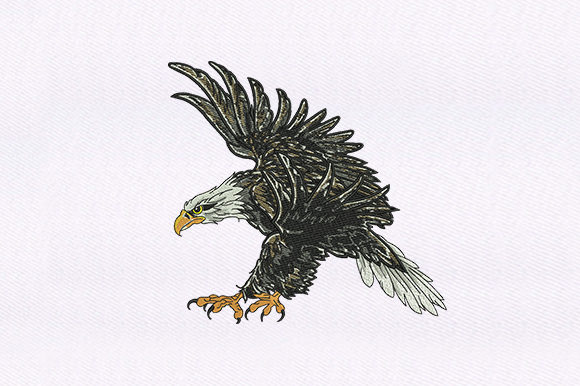
Opening Descending Eagle for the first time, I was immediately struck by its commanding presence. This isn’t a static, posed bird; it’s in motion, wings set in a powerful descent. The visual mood is confident and majestic, making it perfect for projects that need a strong focal point. The detail level feels balanced—not overly dense, but with clear definition in the wings and body that promises good stitch-out results. Its stitching personality leans towards decorative appeal with a touch of realism, naturally fitting custom apparel, statement patches, and bold home decor items.
Where This Design Shines in Real Projects
In my workshop, I considered Descending Eagle for several real-world applications. For a client’s heavyweight sweatshirt or a sturdy canvas tote bag, this design would be an excellent choice. Its scale and dynamic lines would translate well, creating a high-value look. I also pictured it on a denim apron or a pillow cover for a nursery or lodge-style decor—it has that giftable, heirloom quality. For Etsy sellers and boutique owners, this eagle could serve as a powerful brand symbol on merchandise or as a standout feature in product photography for mockups.
Performance on Common Products & Fabrics
Its performance hinges on careful application. On textured fabrics like canvas or twill, the fill stitch areas should hold up well, but a good, firm stabilizer is non-negotiable. For stretchy fabrics like sweatshirt fleece, I would be cautious; the design’s likely stitch density in the body might require extra stabilization to prevent puckering. On curved surfaces like caps, the wingspan would need evaluation—I’d advise checking the product page for suggested hoop size before committing. For dark fabric, thread color contrast becomes critical; a lighter palette would make the eagle pop beautifully.
Practical Considerations for Professional Use
Before running this for a customer order, my standard protocol applies. Always test on scrap fabric first, preferably from the same material as the final project. This reveals how small details, like the feather lines, stitch out and whether any running stitch sections are too fine. Comparing a stitch-out on both light and dark scrap fabric gives the best preview. Inspect the file closely in your software; the provided formats like PES, JEF, and DST are comprehensive, but always confirm the exact details and licensing on the Creative Fabrica product page before selling finished items. This protects your business and builds buyer trust.
Affecting Product Value and Customer Appeal
Using a well-executed design like Descending Eagle directly impacts perceived value. On a handmade gift or boutique item, it elevates the presentation from simple to sophisticated. It enhances visual appeal and, if used consistently, can strengthen brand identity for creative entrepreneurs. For digital product sellers offering printable mockups or design assets, incorporating this eagle into layouts could boost engagement. Its boldness makes it photograph well, which is crucial for Etsy listings and craft fair displays.
Final Thoughts for Fellow Embroidery Designers
Descending Eagle is a compelling machine embroidery design with clear commercial and handmade appeal. Its strength lies in its dynamic artwork and broad format support. For successful use, focus on project matching: it’s ideal for sturdy, flat surfaces where its details can shine. Be meticulous with preparation—stabilizer choice and thread contrast will define the final quality. It’s a design worth downloading for specific projects that call for a powerful, avian motif, but like any embroidery file, its worth is proven in the practical test stitch. Approach it as a professional tool, and it can become a reliable asset for creating high-impact embroidered products.