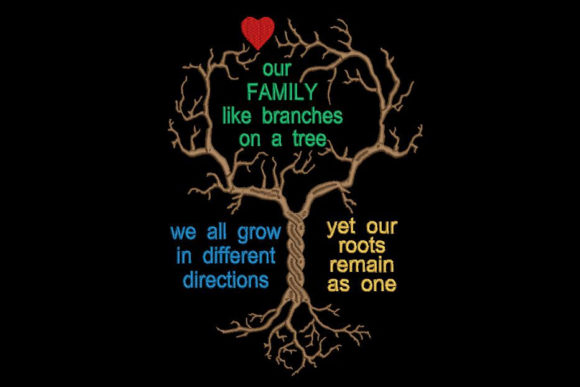
Family Tree and Quote: A Business Branding Review
When a small business looks to elevate its brand through embroidered merchandise, the choice of design is critical. It’s not just decoration; it’s a statement of identity. From my perspective as an embroidery designer, evaluating the Family Tree and Quote embroidery file for commercial use involves looking beyond the stitches. We must assess its visual personality, practical application on various products, and its power to build brand trust and recognition.
First Impression: Warm, Classic, and Handmade-Friendly
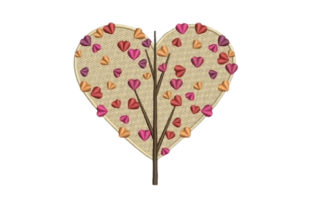
The title Family Tree and Quote immediately suggests a narrative. For a business, this translates to a design that feels personal, rooted, and trustworthy. The description notes it uses five colors with only four color changes, which is a smart setup. This simplicity makes it an easy project, suited for beginners as well as advanced embroidery. This is a significant advantage for small business owners or Etsy sellers who might be managing production themselves. The design inherently leans toward a classic, rustic, and handmade aesthetic. It doesn’t scream modern or minimalist; instead, it offers a warm, decorative elegance that can make a brand feel approachable and established.
Business Application: Where This Design Thrives
Let’s picture real scenarios. A family-run café, a boutique, a creative studio, or a local florist wants to create branded patches, staff aprons, or customer gift merchandise. Family Tree and Quote holds strong potential here.
- Embroidered Patches: This design is a prime candidate for a standalone patch. Its illustrative tree and accompanying quote can create a beautiful, sew-on or iron-on asset for tote bags, backpacks, or as an accent on product packaging. For a handmade shop, a patch with this design on a simple tote bag instantly becomes a sellable merchandise item.
- Uniform & Apparel Accents: On a chef’s apron in a bakery, the design would serve as a charming chest logo. On a work shirt for a boutique, it could be a subtle sleeve detail. The key is its narrative quality—it doesn’t just label the staff; it tells a story about the business’s values.
- Soft Goods & Customer Gifts: Embroidered onto the front of a cap or the corner of a tea towel, Family Tree and Quote becomes a premium gift item. For event merch or loyalty rewards, this design adds perceived value because it feels intentional and crafted, not just printed.
- Brand Consistency Across Products: Using the same embroidery file on aprons, patches, and tote bags creates powerful visual consistency. A customer sees the same motif on different items, reinforcing brand recognition and professionalism.
Practical Considerations for Production Success
The description’s note about color flexibility—”You can use your preferred colors of fabric, and threads to match”—is a gift for product designers. It allows adaptation to your brand palette. However, successful commercial embroidery requires careful planning.
- Size and Scale: Always test the embroidery file at the intended final size. For a small patch (under 3 inches) or a cap front, the quote lettering must be examined closely. Tiny text can become blurry or difficult to read if the stitch density isn’t optimized. Create a printable mockup first to visualize scale.
- Thread Color Contrast: Even with preferred colors, ensure high contrast between the tree elements, the quote, and the background fabric. On dark uniforms, you may need lighter thread colors for the design to pop.
- Fabric and Stabilizer: The design’s performance depends heavily on fabric texture and the use of proper stabilizer. Test on the actual material you’ll use for production—be it apron canvas, cap mesh, or tote bag cotton. An “easy project” can still fail on unsuitable fabric without the right stabilizer.
- Client Approval Process: Before running a large batch, stitch out a single sample. This physical sample is your best tool for client approval and for checking spacing, color placement, and overall impact.
Navigating Potential Limitations with Care
While versatile, Family Tree and Quote has areas that demand a designer’s caution.
- Small Sizes and Curved Surfaces: Applying it to very small patches or the curved front of a cap risks compromising detail. The tree outline and the quote’s clarity are paramount. If the lettering is too intricate at a small hoop size, consider a simplified version or placing the design on a flatter surface.
- High-Stitch-Density Areas: Inspect the design file for areas that might have high stitch density, like the tree trunk or filled leaves. On lightweight fabrics or items needing frequent washing (like work shirts), dense stitching can stiffen the material or wear differently.
- Brand Context: This design fits beautifully with businesses emphasizing family, tradition, craft, or personal connection. For a more tech-forward or ultra-modern brand, it might feel mismatched. Always compare it beside your other brand assets to ensure visual cohesion.
The Final Word: Enhancing Brand Identity and Value
Ultimately, Family Tree and Quote is more than an embroidery file; it’s a brand identity tool. For a small business, embroidery on merchandise signals care and investment. This design, with its classic and handmade presentation, can directly foster customer trust and engagement. A beautifully embroidered patch on a product label suggests premium quality. A uniform with this design feels less corporate and more personal, enhancing staff pride and customer interaction.
My professional advice is straightforward. Treat this as a commercial embroidery project from the start. Confirm the licensing of the digital embroidery file for business use. Test it in black and white first to understand its form without color distraction. Check its viability at your smallest intended patch size. Then, embrace the color flexibility to match your brand perfectly. When executed with these practical steps, Family Tree and Quote can become a enduring and profitable element of your small business merch, from custom apparel to cherished customer gifts.