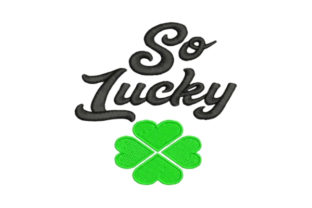
So Lucky: A St. Patrick's Day Embroidery Design Review
As a designer preparing for a weekend craft fair, every embroidery file in my collection gets a critical review. Not just for aesthetics, but for real-world selling power: how will it look on a crowded booth table? How quickly will a customer understand it? Is it practical to produce in batches for my handmade shop? Today, I’m looking at the So Lucky machine embroidery design.
First Impression & Market Mood
The title So Lucky immediately sets a festive, upbeat tone. It’s not overly cartoonish or rustic; it leans into a feeling of elegant celebration. The description highlights a silky satin stitch finish, which suggests a premium, polished look—a crucial factor when your products are side-by-side with others at a market. This isn’t a slapdash, novelty design. For craft fair sellers targeting customers who appreciate handmade quality, this polished feel can elevate a simple tea towel or tote bag into a giftable item.
Product Performance: Where So Lucky Stands Out
Let’s imagine my booth display: rows of embroidered tote bags, aprons, tea towels, and caps. Where does So Lucky shine?
- Tote Bags & Market Bags: This design is a strong focal point. The text-based nature means it’s instantly understandable at a glance—a key advantage in a busy fair environment. On a natural canvas or linen bag, the silky satin stitch would create a beautiful contrast, enhancing the handmade product value.
- Aprons & Kitchen Towels: For St. Patrick’s Day, these are perennial sellers. So Lucky offers a more decorative, less kitschy option than typical shamrock motifs. It feels modern and suitable for year-round use in a farmhouse-style kitchen, which broadens its appeal beyond just the holiday.
- Embroidered Patches & Pouches: As a smaller accent on a fabric pouch or as a standalone patch, its clarity is vital. I would need to test it at reduced sizes to ensure the lettering remains crisp and doesn’t become a dense, puckered mass.
- Caps & Pillow Covers: On curved cap surfaces, the design’s simplicity is an asset—complex designs can distort. For pillow covers, it becomes a subtle, decorative element that can anchor a holiday-themed display in my booth.
Practical Production & Selling Points
Turning a digital embroidery file into a profitable craft fair product requires practical analysis.
Batch Production & Clarity
The phrase So Lucky is short and impactful, making it highly repeatable for batch production. I can efficiently stitch it out on a series of tea towels without it feeling monotonous. However, the mention of a “silky satin stitch” requires attention. Satin stitches, especially on text, demand proper stabilizer and appropriate fabric texture. On textured towels or thick fabrics like some aprons, I’d need to test on scrap fabric first to prevent thread breakage or loss of definition.
Photography & Online Listings
For my Etsy listings and printable mockups, this design photographs well. Text-based designs are easy for customers to read in online images, boosting engagement. The “gorgeous” result described promises high visual appeal, which I can highlight in my listings to communicate premium handmade quality. It supports brand consistency if my shop leans towards elegant, clean designs.
Customer Attention & Booth Display
In a booth, a well-executed So Lucky embroidery on a dark fabric tote bag with bright, contrasting thread colors would act as a visual magnet. It’s a conversation starter. Customers might connect with the positive message, increasing buyer engagement beyond a simple visual purchase.
Careful-Use Notes for the Embroidery Designer
Before I stitch this on any final product for my small shop, here’s my checklist:
- Test on Scrap Fabric: Always. I need to see how the satin stitch behaves on the actual materials I sell—linen, canvas, cotton, towel fabric.
- Check Thread Contrast: On dark fabrics, I’ll likely use a bright white or gold to maximize the “silky” effect and clarity.
- Review Stitch Density & Lettering: Small lettering in satin stitch can become overly dense. I must inspect the design file closely to ensure spacing is adequate to avoid fabric puckering, which ruins the premium look.
- Confirm Hoop Size: The description doesn’t specify a hoop size. I must check the embroidery file details to know the minimum hoop required. This dictates which products I can use—a large design won’t fit on a cap.
- Use the Right Stabilizer: This is non-negotiable for a clean finish on any commercial embroidery product, especially with satin stitches.
- Create a Real Mockup: Before batch production, I will stitch at least one finished product, like a tea towel, to evaluate the final look and feel.
- Compare Fabric Colors: I’ll audition the design on different background colors to see which combinations sell the mood best—perhaps a sage green towel with white thread.
- Confirm Commercial Licensing: The description doesn’t mention license terms. As a business owner selling finished products, I must verify that my use is covered before selling any handmade item.
Final Judgment for Craft Fair Success
So Lucky has strong potential for St. Patrick’s Day and general festive markets. Its elegance allows it to transcend a single holiday, appealing to customers looking for a quality, word-based decoration. For embroidery business owners, its simplicity aids in batch production, but the satin stitch execution demands careful setup to maintain that gorgeous result. It will stand out on tote bags and aprons as premium items. For booth display strength, I would feature it on a variety of products to show its versatility, driving home its value as a versatile design asset. The key to its success lies in the pre-production testing—ensuring that every stitched “So Lucky” on every craft fair product truly lives up to its name.