A Designer's Honest Review of the "Proud Air Force Wife" Embroidery File
When a new embroidery design lands in my library, I don't just look at the preview image. I think about how it will breathe on fabric, how it will feel in a client's hands, and where it truly belongs in the world of handmade products. Let’s walk through that process with the “Proud Air Force Wife” machine embroidery design.
The First Impression: Sentiment Meets Simplicity
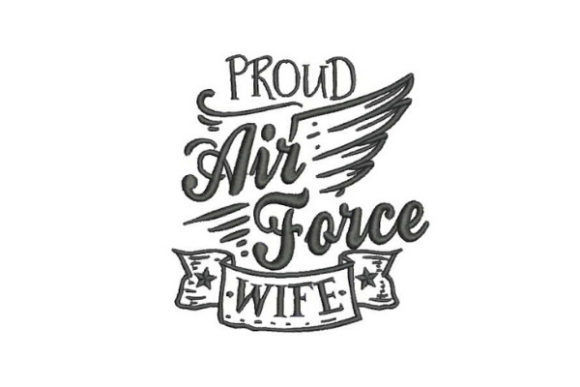
This design immediately communicates a clear, proud sentiment. Its strength lies in its straightforwardness—it’s a declaration, not a dense illustration. The layout suggests it’s built for gorgeous satin stitches, which means we’re looking for smooth, glossy lettering and perhaps some elegant fill stitch accents. The visual personality is dignified and direct, creating a mood of respectful pride rather than playful whimsy. It naturally belongs to projects meant for personal acknowledgment or heartfelt gifts, not casual everyday graphics.
Where This Design Finds Its Perfect Home
In my workshop, I’m picturing it on a navy-blue tote bag for a military spouse, the satin stitches gleaming against the sturdy canvas. It would be equally striking on the breast of a soft, heather-gray sweatshirt—a personalized gift that feels both private and proud. For a small business owner crafting boutique products, think of elegant pillow covers for a home or a crisp apron; these items carry the message into daily life with a handmade touch.
Consider also its potential as an embroidered patch. Applied to a backpack or a quilt, it becomes a portable badge of honor. For baby items, like the border of a blanket, it could be a beautiful tribute from a mother, though the scale would need careful adjustment. The design’s clarity makes it a strong candidate for printable mockups, helping digital product sellers and creative entrepreneurs showcase its application on tea towels, caps, or kitchen linens before even loading the hoop.
The Practical Stitch-Out: Thinking Like an Embroidery Machine
The promise of “gorous satin stitches” is key. Satin stitch borders and lettering demand good stabilizer and appropriate fabric choice to prevent puckering and maintain that sleek look. On textured fabrics like some sweaters or thick towels, the clarity might soften, so a smooth, tight-knit fabric is ideal. For dark fabric backgrounds, you’ll need to plan thread color contrast—a bright white or metallic thread could make this design pop beautifully.
Stitch density is a consideration here. If the design uses dense satin fills, it will be robust but may feel stiff on lightweight or stretchy fabrics like t-shirts. This isn’t a design I’d automatically choose for a delicate baby garment unless I was confident in my stabilizer combo and hooping technique. On curved surfaces like caps, the larger, continuous elements should handle the curve well, but any tiny, intricate corners would need attention during the stitch-out.
Scenarios That Demand Extra Care
This is not a design to run blindly on the first hoop. Small hoop sizes could compress the lettering, potentially losing legibility and elegance. Always test on scrap fabric first, preferably the same material as your final project. Inspect the small details in the stitch-out—are the connections between letters clean? Does the satin stitch lay smoothly without gaps?
For layered garments or items that need frequent washing, like a favorite sweatshirt, the design’s integrity relies on quality thread and proper application. A dense design on thin fabric might show shadowing or be too prominent. I’d advise comparing it on both light and dark fabric backgrounds in a test run to truly judge its visual appeal across applications.
Beyond the Stitches: Value, Trust, and Presentation
When this design stitches out well, it elevates a product. For an Etsy seller or craft fair vendor, a cleanly embroidered “Proud Air Force Wife” tote bag speaks of professionalism and care. It shows you understand the sentiment and can execute it with quality, which builds customer trust. The handmade presentation feels intentional and respectful, boosting the product’s giftability immensely.
For apparel decorators or small shop owners, using such a design consistently across a product line—say, on aprons, pillow covers, and tea towels—can create a cohesive brand collection for a niche audience. The recognition factor is high; it connects instantly with its community. This engagement is practical: it answers a specific need, making it a stronger commercial embroidery asset than a generic pattern.
Essential Designer Notes Before You Hoop
My final thoughts are always practical notes. First, the design comes with multiple embroidery file formats—confirm your machine’s compatibility before starting. Check the actual stitch count and recommended hoop size with the provided files; don’t assume.
Secondly, critically review the licensing terms. If you’re a digital product seller or using this for commercial embroidery projects, you must know if you’re allowed to sell the finished products or create derivative digital assets. This is non-negotiable for a craft business.
Finally, thread choice is your secret weapon. For this design, consider a slight sheen or a classic matte finish to match the project’s mood. Use adequate stabilizer for the fabric, and always, always run that test stitch-out. It saves heartache, thread, and client relationships.
The “Proud Air Force Wife” embroidery design has a clear purpose and a straightforward beauty. By placing it thoughtfully on the right product, preparing your machine with care, and respecting its technical needs, you can create finished items that carry real meaning and showcase your skills as a maker. It’s a design that asks for a bit of forethought but rewards you with a clean, proud, and professional result.